

Mobile home leveling in Central Florida corrects uneven support beneath a manufactured home by adjusting piers, blocking, or shims to suit its support system. Low spots, sloping floors, sticking doors, or an uneven feel underfoot can point to shifting supports. An inspection helps determine whether your home needs leveling, anchoring, or pier and beam repairs. Learn what these repairs involve, which signs to watch for, and how the work can vary for single-wide, double-wide, and triple-wide homes.
Key Takeaways
- Learn how uneven floors, sticking doors, and other changes can point to shifting support beneath your home.
- See how piers, blocking, and shims work together to support a home and correct unevenness.
- Understand how anchoring and tie-downs help secure a manufactured home as part of weather preparation.
- Find out when a HUD or foundation inspection may help buyers, sellers, lenders, and insurers assess a home.
Mobile Home Leveling and Re-Leveling in Central Florida
Mobile home leveling in Central Florida corrects uneven support beneath a manufactured home. An inspection can also identify whether the anchoring system needs attention, since support and tie-down concerns call for different repairs.
Leveling and Tie-Down Work
Leveling addresses uneven support beneath the home. A professional inspects the support points, then adjusts the system to bring the structure closer to level. Depending on the findings, the work may involve piers, blocking, or shims. Anchoring and tie-down work secures the home to its support system. When choosing mobile home leveling in Central Florida, review the written scope, confirm Florida mobile-home-installer licensing, and ask how the work will be documented. Clear service means explaining what the crew found and how it checked the finished system.
Timing and Site Conditions
There is no fixed schedule for every leveling job. Home size, support conditions, access beneath the structure, and any additional pier or tie-down work affect the timing. After inspecting the site, a professional can explain the work sequence. Central Florida soil and drainage conditions matter too. Pooling water or soft ground may contribute to shifting, so the assessment should consider the ground and drainage before adjustments begin.
Permit and code requirements depend on the work and local jurisdiction. Identify the applicable requirements before work starts. Leveling without a qualified professional can result in uneven adjustments or damage to supports. Insurance or warranty coverage depends on policy terms and the cause of the problem.
Piers, Blocking, and Foundation Adjustments
A manufactured home relies on sound support points beneath its frame. A professional inspects the foundation, checks alignment, adjusts or repairs supports, and rechecks the completed system.
Foundation and Pier Adjustments
Piers transfer the home’s weight to the ground, while beams connect support points beneath the frame. If a pier is damaged, loose, or no longer supports its location evenly, the surrounding structure should be assessed before adjustments are made. Pier and beam repair may involve rebuilding a support or correcting its position. The repair and materials depend on the existing foundation and the inspection findings. Ask which locations need work and why.
Shimming and Blocking Steps
Shims fill small gaps between a support and the structure above it. Blocking creates a firm bearing surface at the support point. During re-leveling, the crew identifies where the frame lacks even contact, makes adjustments, and checks alignment again. The goal is properly leveled support, not simply adding material wherever a gap appears. You should know which supports were adjusted and how the crew checked the completed system.
For example, if a beam rests unevenly over a pier, the connection and nearby supports need attention. A professional considers the full support arrangement before choosing a repair, because changing one location can affect adjacent points. This inspection-led approach matches the adjustment and materials to the home’s actual foundation.
How to Identify Low Spots in Mobile Home Floors
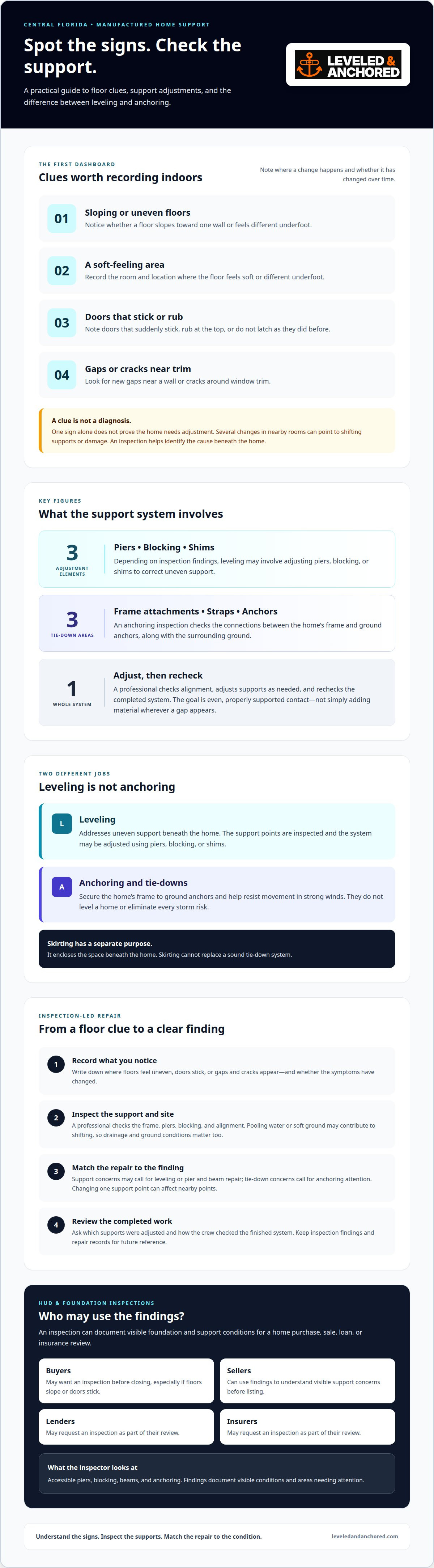
Mobile home leveling adjusts the supports beneath a manufactured home to correct uneven positioning. Indoors, you may notice a floor sloping toward one wall, a soft-feeling area, or doors that suddenly stick. One sign alone doesn’t prove the home needs adjustment, but several changes in nearby rooms can indicate shifting supports or damage.
Walk through each room and note where the floor feels different underfoot. A marble rolling toward one side may reveal a slope, while a new gap near a wall can signal movement. Check whether doors rub at the top or latch, and note any cracks around window trim. Record where symptoms occur and whether they have changed. These observations help describe the issue during an inspection, but they don’t reveal the cause beneath the home.
A professional inspection connects indoor symptoms with the support system below. The inspector checks the frame, piers, and blocking, then determines whether leveling or another repair suits the condition. Before work begins, review the proposed scope and confirm the professional is licensed and insured. Ask how the findings relate to the low spots you noticed. This helps clarify the repair and distinguish uneven flooring from a broader support issue.
Anchoring, Tie-Downs, and Hurricane Preparation
Anchors and tie-downs connect a manufactured home’s frame to ground anchors, helping resist movement in strong winds. They don’t level a home or eliminate every storm risk. A professional inspects the full connection, including frame attachments, straps, anchors, and surrounding ground. Missing, loose, bent, or corroded components can weaken the system and need attention.
Before hurricane season, have the tie-down system inspected for visible wear and secure connections. The installer assesses the home’s setup and identifies any needed anchoring work. Soil conditions and past movement can affect how anchors hold, so the area beneath and around the home matters. Keep records of inspection findings and completed repairs. They provide a useful reference for future maintenance and storm preparation.
Skirting has a different purpose from anchoring. It encloses the space beneath the home, while tie-downs secure the structure to its anchors. If wind or water damages the skirting, repairs can restore the enclosure, but skirting cannot replace a sound tie-down system. A professional can assess both and explain which work addresses the condition. For hurricane preparation, focus on anchoring connections and support conditions rather than treating one repair as a substitute for the other.
HUD and Foundation Inspections
A HUD or foundation inspection can document a manufactured home’s support condition for a purchase, sale, loan, or insurance review. Buyers may want an inspection before closing, especially if floors slope or doors stick. Sellers can use the findings to understand visible support concerns before listing. Lenders and insurers may request an inspection as part of their review.
The inspection focuses on the home’s foundation and support system. The inspector examines accessible piers, blocking, beams, and anchoring, then records visible conditions and areas needing attention. For example, a displaced block or loose tie-down may be noted alongside uneven support. The inspection distinguishes an observable issue from a repair decision, so the next step addresses the condition found rather than relying on guesswork.
HUD-related inspection requirements can differ from those of a general foundation assessment, so clarify the report’s purpose and who will use it. A buyer’s lender may need specific documentation, while a seller may need a record of foundation conditions. Share the request details, including any lender or insurer instructions, with the inspector. Afterward, review the findings and recommended corrections with the party that requested the report. If leveling or support repairs are needed, the documented condition can help define the work.
LEVELED and ANCHORED Mobile Home Services
LEVELED and ANCHORED Mobile home services addresses manufactured-home support issues in Central Florida. Its Leveling & Re-Leveling service corrects uneven support beneath your home. If an inspection identifies damaged or shifted supports, Piers & Blocking can address those components.
Anchoring & Tie-Downs addresses the connections that secure a home to ground anchors. This work is distinct from leveling, though both may be needed to address different support concerns. HUD & Foundation Inspections document foundation conditions for homeowners, buyers, lenders, and insurers. These services provide a practical next step when uneven floors, support concerns, or transaction requirements call for professional attention.
The company is a Florida-licensed mobile home installer with more than a decade of experience leveling and anchoring manufactured homes. It serves Orange, Seminole, Lake, Osceola, and Volusia counties. For mobile home leveling in Central Florida, share your home’s location, the symptoms you’ve noticed, and any inspection or lender requirements. This helps focus the discussion on the work you need. Free estimates are available.
For help with leveling, support repairs, anchoring, or an inspection, contact LEVELED and ANCHORED Mobile home services.
Frequently Asked Questions
Can a mobile home need leveling if only one room feels uneven?
Yes. A low area in one room can be a reason to assess the home’s support system. The floor surface alone cannot show whether the cause is beneath the home or within the room. For example, if a soft spot appears near a doorway while nearby doors still operate normally, an inspection can help determine whether the concern is localized or related to wider support movement.
What should you have ready before arranging a mobile home assessment?
Gather inspection reports, repair records, or lender requests related to the home. Note when you first noticed a change and whether it followed heavy rain, a storm, or earlier repair work. This context helps the inspector review the current condition and relate visible concerns to the home’s history.
How often should a mobile home be inspected or releveled?
Have the tie-down system inspected before hurricane season. Re-leveling is appropriate when symptoms such as sloping floors or sticking doors lead to an inspection that finds uneven support. There is no routine re-leveling interval.